

Careers
A Day in the Life of an Escort Custody Officer
at a vehicle base
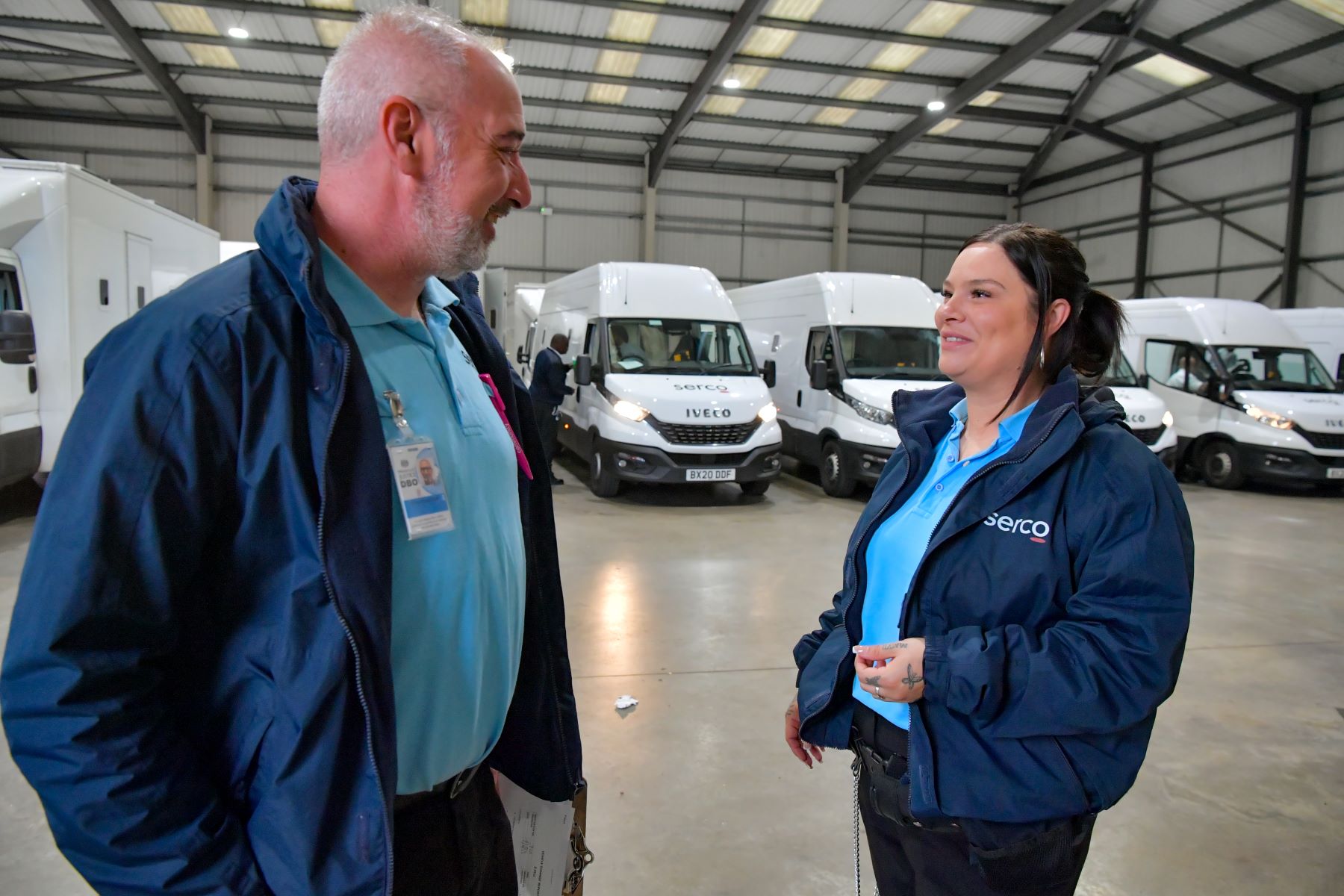
"What does a vehicle base Escort Custody Officer do?"
If you're considering a career as a youth Escort Custody Officer (ECO) in our Prisoner Escort and Custody Services (PECS) team), you might be wondering what the role actually involves.
Escort Custody Officers play a vital role in supporting the criminal justice system by safely escorting children and young people in custody between police stations, courts, Secure Children's Homes, Secure Training Centres and other secure establishments across England.
Working as part of a three-person crew, they help keep every journey safe, secure and respectful while putting safeguarding at the heart of everything they do.
To find out what the role is really like, we caught up with one of our Escort Custody Officers to hear about a typical day.
Escort Custody Officers play a vital role in supporting the criminal justice system by safely escorting children and young people in custody between police stations, courts, Secure Children's Homes, Secure Training Centres and other secure establishments across England.
Working as part of a three-person crew, they help keep every journey safe, secure and respectful while putting safeguarding at the heart of everything they do.
To find out what the role is really like, we caught up with one of our Escort Custody Officers to hear about a typical day.
Starting the day
"Every shift starts at the depot with the rest of the crew. Custody escort vehicles operate with three people – one driver and two escort officers – so teamwork starts before we've even left the depot.
We begin with a briefing where managers share operational updates, safety information and anything that could affect the day ahead. Before heading out, we collect and sign for our issued equipment, including keys, restraints and communication devices, and hand in our personal mobile phones.
As a crew, we carry out vehicle safety and security checks to make sure it's clean, roadworthy and stocked with essentials like drinking water. We then review the day's planned movements, check custody documentation and discuss who we'll be transporting, including any medical needs, vulnerabilities or safeguarding considerations.
Before we leave the depot, everyone understands their responsibilities. Good preparation helps us respond confidently to whatever the day brings."
We begin with a briefing where managers share operational updates, safety information and anything that could affect the day ahead. Before heading out, we collect and sign for our issued equipment, including keys, restraints and communication devices, and hand in our personal mobile phones.
As a crew, we carry out vehicle safety and security checks to make sure it's clean, roadworthy and stocked with essentials like drinking water. We then review the day's planned movements, check custody documentation and discuss who we'll be transporting, including any medical needs, vulnerabilities or safeguarding considerations.
Before we leave the depot, everyone understands their responsibilities. Good preparation helps us respond confidently to whatever the day brings."
Supporting children and young people safely
"Every day is different. We transport children and young people between police stations, courts, Secure Children's Homes, Secure Training Centres and other secure establishments across England.
Some journeys are local, while others involve travelling much further, but our responsibility remains the same – making sure every young person is transported safely, securely and with dignity.
Before anyone enters the vehicle, we complete strict security procedures alongside police custody staff and colleagues from secure establishments to ensure a safe handover.
Once we're on the road, the driver focuses on driving while the two escort officers concentrate on the welfare and safety of the young person. We carry out regular welfare observations, maintain communication and are always ready to respond if additional support is needed."
Some journeys are local, while others involve travelling much further, but our responsibility remains the same – making sure every young person is transported safely, securely and with dignity.
Before anyone enters the vehicle, we complete strict security procedures alongside police custody staff and colleagues from secure establishments to ensure a safe handover.
Once we're on the road, the driver focuses on driving while the two escort officers concentrate on the welfare and safety of the young person. We carry out regular welfare observations, maintain communication and are always ready to respond if additional support is needed."
step 3:
Safeguarding comes first
"Safeguarding is central to everything we do.
Every child or young person has different experiences, needs and circumstances. Some may be anxious, distressed or have additional physical or mental health needs, so we're given information before every journey to help us understand how best to support them.
We adapt how we communicate while maintaining professional boundaries at all times. Our role is to keep everyone safe while treating every individual fairly, respectfully and without judgement."
Every child or young person has different experiences, needs and circumstances. Some may be anxious, distressed or have additional physical or mental health needs, so we're given information before every journey to help us understand how best to support them.
We adapt how we communicate while maintaining professional boundaries at all times. Our role is to keep everyone safe while treating every individual fairly, respectfully and without judgement."
Working together
"Some days involve travelling across England, while others are centred around supporting court movements.
Longer journeys may include planned comfort stops, and occasionally we may remain with someone receiving medical treatment until responsibility is formally handed over.
The variety keeps every day interesting. Every journey is different and every young person has different needs, so you're constantly learning."
Longer journeys may include planned comfort stops, and occasionally we may remain with someone receiving medical treatment until responsibility is formally handed over.
The variety keeps every day interesting. Every journey is different and every young person has different needs, so you're constantly learning."
No two days are the same
"Some days involve travelling across England, while others are centred around supporting court movements.
Longer journeys may include planned comfort stops, and occasionally we may remain with someone receiving medical treatment until responsibility is formally handed over.
The variety keeps every day interesting. Every journey is different and every young person has different needs, so you're constantly learning."
Longer journeys may include planned comfort stops, and occasionally we may remain with someone receiving medical treatment until responsibility is formally handed over.
The variety keeps every day interesting. Every journey is different and every young person has different needs, so you're constantly learning."
The challenges
"It's a rewarding role, but it can also be demanding.
Plans change because of traffic, court delays or operational requirements, so flexibility is important. There are also times when young people may be upset, anxious or experiencing emotional distress.
The training prepares you well, and you're never dealing with situations on your own. Your colleagues are always there to support each other."
Plans change because of traffic, court delays or operational requirements, so flexibility is important. There are also times when young people may be upset, anxious or experiencing emotional distress.
The training prepares you well, and you're never dealing with situations on your own. Your colleagues are always there to support each other."
The rewards
"The most rewarding part of the role is knowing I've helped a young person safely through an important stage of the criminal justice system.
You build confidence knowing you're making a positive difference while treating everyone with dignity and respect.
Every day brings new experiences, and that's what makes the role so fulfilling."
You build confidence knowing you're making a positive difference while treating everyone with dignity and respect.
Every day brings new experiences, and that's what makes the role so fulfilling."
Could this role be for you?
You don't need previous custody experience to become an Escort Custody Officer.
Many of our colleagues have backgrounds in education, youth work, care, customer service, logistics, hospitality, retail, transport, the Armed Forces and emergency services.
If you're calm under pressure, communicate with empathy, enjoy working as part of a close-knit team and want a career where safeguarding and supporting young people is at the heart of what you do, this could be the role for you.
We'll provide all the training, equipment and ongoing support you need to build a rewarding career with Serco, including specialist training to prepare you for working with children and young people in custody.
Many of our colleagues have backgrounds in education, youth work, care, customer service, logistics, hospitality, retail, transport, the Armed Forces and emergency services.
If you're calm under pressure, communicate with empathy, enjoy working as part of a close-knit team and want a career where safeguarding and supporting young people is at the heart of what you do, this could be the role for you.
We'll provide all the training, equipment and ongoing support you need to build a rewarding career with Serco, including specialist training to prepare you for working with children and young people in custody.